
Why It Matters
On 11 February 2026, S. Paul Kapur, U.S. Assistant Secretary of State for South and Central Asia, testified before a Congressional Committee on the broad contours of emerging U.S. policy toward the region. A specialist in South Asian politics, terrorism, security, and nuclear issues, Kapur is the author of Jihad as Grand Strategy: Islamic Militancy and Pakistani State (Oxford, 2017).
While the testimony was not about that book, the intellectual backdrop of the “weak state-militancy nexus” remains relevant in interpreting Washington’s policy direction.
Key Themes of the Testimony
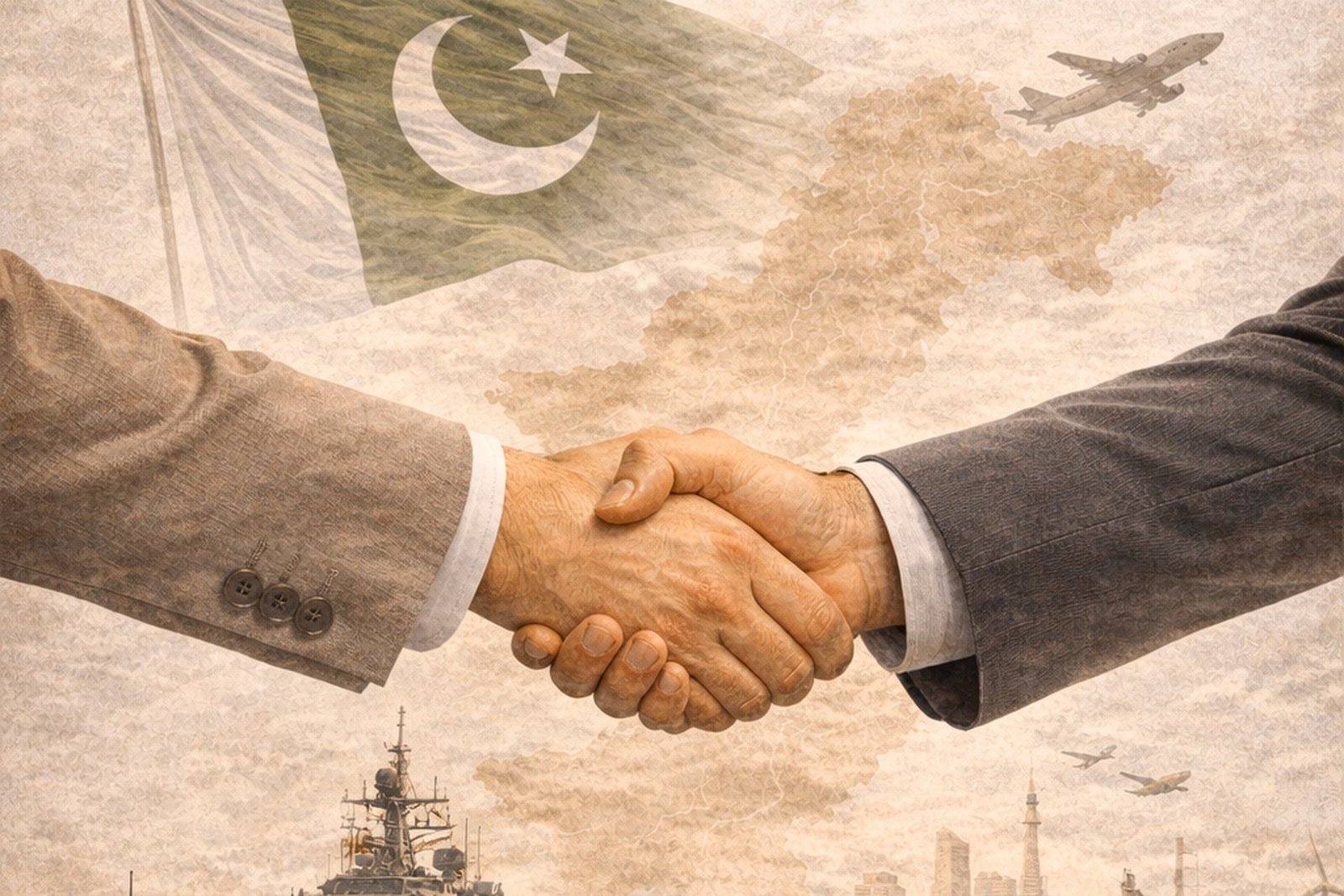
Kapur’s remarks covered trade, energy flows, maritime security and piracy, counterterrorism, strategic minerals, and defense cooperation, ranging from weapons sales and co-production to joint military exercises.
Committee questioning, however, was sharply focused on India’s role in containing China. Members pressed for India to “do more,” positioning it as a pivotal partner not only in South and Central Asia, but also across the Indo-Pacific.
Within this broader framing, Kapur described Pakistan as “another important partner,” particularly in the development of critical mineral resources. He noted that U.S. seed financing, combined with private-sector expertise, could yield mutual economic benefit.
In my view, this signals a dual-track U.S. approach: deepening strategic alignment with India while maintaining functional engagement with Pakistan.
Strategic Direction and Its Implications
- U.S.-India Defense and Trade Alignment: Tariff reductions (reportedly from 50% to 15%) and the 2025-2035 U.S.-India Defense Framework Agreement point to an expanding ten-year strategic partnership across trade, energy, technology, and defense co-production. 2. India as Regional Anchor: The U.S. view positions India as an “anchor” in South Asia (though not necessarily a hegemon). Chin
a is not expected to disappear from the region, but its diplomatic and economic footprint is to be constrained. 3. Countering China’s Economic Outreach: Chinese infrastructure financing in places such as Sri Lanka (Hambantota Port) and the Maldives is often framed in Washington as debt-trap diplomacy, reinforcing the counter-narrative to BRI. 4. Indo-Pacific and the Quad: Citing the 2025 U.S. National Security Strategy, testimony emphasized stronger quadrilateral coordination with Australia and Japan and alignment to prevent domination by any single power. 5. Selective Silences: Notably absent were references to India-Pakistan normalization, resolution of South Asian disputes, Kashmir, or minority concerns inside India. 6. Afghanistan Lens: Afghanistan was discussed primarily through unresolved resettlement challenges for Afghans who had supported NATO forces.
Policy Gaps and Regional Concerns
The testimony underscored maritime security (with roughly 80% of energy trade transiting the Indian Ocean), counterterrorism, and economic integration. Yet it did not address how durable stability can be achieved without parallel efforts at regional conflict resolution.
A containment-heavy strategy may intensify polarization rather than foster cooperative security.
What Should Be Pakistan’s Strategy?
- Economic Diversification and Connectivity: Expand trade and transit with Central Asia, re-engage Afghanistan pragmatically, and seek support for the Turkmenistan-Afghanistan-Pakistan (TAP) gas pipeline.
- Defense Modernization: Strengthen naval and air capabilities, expand exercises, and modernize defense production while rightsizing force structure.
- Human Capital Investment: Prioritize skill development to transform Pakistan’s youth into globally competitive talent.
- Strategic Hedging: Build workable bridges with both the U.S. and China, avoiding client-state dependence and preserving room for diplomatic maneuver.
Concluding Thought
U.S. policy appears to be consolidating around India-centric balancing against China, with selective engagement of Pakistan. For Islamabad, the challenge is to move beyond reactive diplomacy toward calibrated economic statecraft, regional connectivity, and strategic balance.
Testimony source: ForeignAffairs.House.gov, South Asia: U.S. Foreign Policy in the Region, Wednesday, February 11, 2026, 2:00 PM.
Discussion
Join the conversation. Comments are powered by GitHub Discussions.