
PAKISTAN: MILITANCY, THE TRANSITION TO DEMOCRACY AND FUTURE RELATIONS WITH THE UNITED STATES
Abstract
Pakistan’s geostrategic location has made it a country of pivotal importance from the Cold War to the present day. Geography not only shapes Pakistan’s foreign policy, but also its defense considerations and strategic outlook. Its crucial position in South Asia, with its proximity to the Arabian Peninsula and access to the Horn of Africa and Central Asia, make it a strategically attractive and unavoidable state for global and regional powers. China continues to be a reliable friend and considers Pakistan a window of strategic opportunity.¹ For Russia, Pakistan could offer access to “warm waters” if Afghanistan were to gain stability, thus improving the level of trust between the two nations. India’s imminent emergence as a regional power will likely be contested by Pakistan, and the peace process between the two rivals will continue at a snail’s pace.
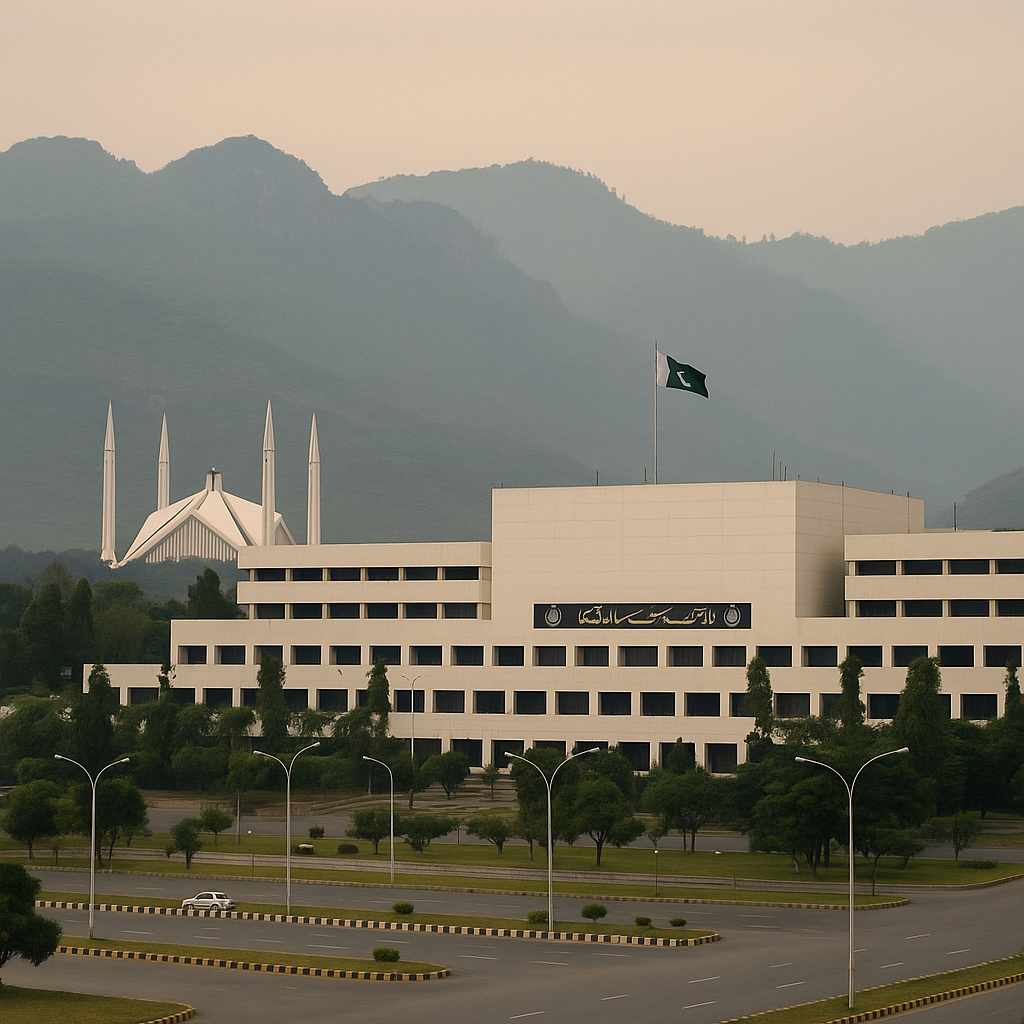
Pakistan’s geostrategic location has made it a country of pivotal importance from the Cold War to the present day. Geography not only shapes Pakistan’s foreign policy, but also its defense considerations and strategic outlook. Its crucial position in South Asia, with its proximity to the Arabian Peninsula and access to the Horn of Africa and Central Asia, make it a strategically attractive and unavoidable state for global and regional powers. China continues to be a reliable friend and considers Pakistan a window of strategic opportunity.¹ For Russia, Pakistan could offer access to “warm waters” if Afghanistan were to gain stability, thus improving the level of trust between the two nations. India’s imminent emergence as a regional power will likely be contested by Pakistan, and the peace process between the two rivals will continue at a snail’s pace.
Pakistan continues to have strong cultural and strategic partnerships with Iran and Saudi Arabia.² Iran’s nuclear ambitions, and the growing consensus among the Great Powers to curb these, may boost the geostrategic value of Pakistan in the region. With the recent construction of the Gwadar Port, which now serves as a gateway to the Gulf States, Pakistan’s importance will only increase in the region. In the coming decades, as the rivalry among global powers to dominate the Indian Ocean intensifies, it becomes likely that whichever power influences the Persian Gulf will control not only the Arabian Sea but also the Indian Ocean.³
In addition to its strategic geopolitical significance, the global war on terrorism has enhanced Pakistan’s significance as a regional hub of terrorism. Pakistan is all at once a country of origin, a destination, a conduit and a victim of global jihad. According to Bruce Riedel’s characterization, Pakistan has emerged as the “critical battlefield” in the war against global jihad.⁴
In the post-9/11 world, U.S. policy toward Pakistan has undergone a paradigm shift. In less than a decade, Pakistan has graduated from being a frontline state to being a NATO ally and strategic partner. Since 2002, Pakistan has been the recipient of over $10.5 billion in U.S. military and economic assistance; and more than $1.5 billion in non-military aid is pledged annually for the next five years.⁵ From an American military perspective, this region is crucial for global stability and American security as it is home to numerous countries that have supported, funded or politically backed global terrorist groups. The list includes Pakistan, Iran, Iraq, Afghanistan, Saudi Arabia, Israel and India. With the exception of Israel and India, this geographical area is under the responsibility of the U.S. Central Command (CENTCOM), currently the U.S. military’s most important regional command.
Pakistan is all at once a country of origin, a destination, a conduit and a victim of global jihad.
American–Pakistani relations are affected by several dynamics. First, it is clear that this shift in U.S.–Pakistan relations is driven primarily by a regional security imperative of which considerations of oil flow, energy needs, regional stability and the global war on terrorism are contributing factors. It is thus vital for the United States to build a strategic partnership with Pakistan. Pakistan has provided the United States with logistical support, airspace and intelligence in the 1950–60s, 1980s and today. From 1979 to 1989, Pakistan played a key role in organizing and supporting the U.S.-led Afghan resistance movement against Soviet occupation. From this period emerges many of today’s global terrorism challenges.
Second, the U.S. has had an abiding interest specifically in Pakistan because of Pakistan’s role in Cold War policies of containment, present-day concerns over Iran, the global war on terror, a Central Asian energy corridor and Pakistan’s nuclear assets. There have been “low” and “high” periods in this relationship however, depending on the size and scale of perceived threats to U.S. security interests in a given period.⁶
Third, the U.S. has distanced itself from Pakistan and resorted to coercive diplomacy on occasion (e.g., withholding nuclear-free certification and imposing economic sanctions in 1990), but it never disengages completely. Fourth, U.S.–Pakistan relations are defined and driven by geostrategic considerations in the Persian Gulf and Indian Ocean that help keep the United States involved in the region. Finally, Pakistan’s nuclear capability, particularly considering the revelations of proliferation and the possibility of nuclear weapons falling into the hands of religious militants, is a source of anxiety for the U.S. In the eyes of many Western observers, Pakistan’s religious militancy and elite conflicts could rupture its very existence; it is becoming ungovernable and thus on the brink of collapse.
Despite recent elections and an ongoing transition process from a military regime to a civilian-led multi-party coalition, these Western observers remain skeptical, questioning how the transition has impacted civil–military relations and the consolidation of the democratic party system.
This essay will first provide an overview of Pakistan’s recent tumultuous political history, including the revolt of urban professionals, the assassination of Benazir Bhutto and the elections on 18 February 2008 which led to the subsequent installation of a civilian-led party government. Pakistan’s return to civilian rule intensified the power struggle among the political parties to recast alliances, redefine opposition–government relationships, develop rules of power-sharing with the military and, most importantly, envision building a sustainable strategic partnership with the United States. The paper then analyzes how the U.S. has begun to reassess the substance and meaning of this relationship from a narrowly focused military-to-military relationship to a more comprehensive partnership, deepening its scope and scale with the goal of supporting the democratic transition in Pakistan. Yousaf Raza Gilani assumed the office of prime minister on 23 March 2008 and Asif Ali Zardari the presidency on 9 September 2008, and both have been striving to assure the skeptical international community that Pakistan can be trusted to ensure the safety of its nuclear weapons, curb religious extremism and put Pakistan on a path to democracy.⁷
Since late 2007, and particularly since Barack Obama assumed the American presidency, the U.S. State Department and congressional leaders have become more explicit in declaring the United States’ intention to build a long-term partnership with Pakistan, support Pakistan’s pluralism, democracy and the civilian government’s aim to strengthen people-to-people relationships. The United States also has stated its desire to help Pakistan dismantle, disrupt and destroy terrorist networks.⁸ A shift of emphasis from strategic imperatives to shared values, socioeconomic development and support for democratic Pakistan augurs well and could energize and redefine the parameters of long-term, sustainable relations between Pakistan and the U.S. The critical question is: how ready and responsive are the military and civilian leaders in Pakistan to discern and adopt this change in U.S. policy?
Military Hegemony or Party Dominance?
For over sixty years, Pakistan has oscillated between military-hegemonic and dominant-party political systems. Persistent and prolonged military rule has entrenched the military in politics, business and even in the social sphere (i.e., the militarization of Pakistani society). Despite this entrenchment, military rule has never gained legitimacy among Pakistani citizens. In a military-hegemonic system, the military has a monopoly over strategic policy issues and the state’s decision-making institutions.
The military-hegemonic system functions via three identifiable processes: first, political control through executive orders/ordinances; second, political exclusion through the deactivation of political parties and the active groups, restriction on participation of urban professional groups; and third, the building of a strategic partnership with the United States. Pakistani history shows that military hegemony evokes resistance: the longer the period of military rule, the stronger the resistance movements become in their push for free and fair elections. Upsurges of resistance and demands for the restoration of democracy by civil society groups and political parties have followed each period of military rule (General Ayub Khan, 1958–69; General Yahya Khan, 1969–71; General Zia ul-Haq, 1977–88; and General Pervez Musharraf, 1999–2008). The recurring pattern has been that the collapse or weakening of the military regime paves the way for elections which then facilitate a transition to civilian-led party governments.
It is distressing to note, however, that with each election, opportunities for consolidating civilian-led party governments have been misspent by Pakistan’s political parties. Political leaders and parties have not been successful in constructing a party system nor in promoting democratic values. A culture of respect for dissent, necessary for facilitating a representative form of government, has yet to be developed. The tendency has been for political parties in power to establish their dominance. In particular, the Pakistan Peoples Party (PPP), led by Zulfikar Ali Bhutto from 1971 to 1977; the Pakistan Muslim League (PML), led by Muhammad Khan Junejo from 1985 to 1988; and both the Bhutto-led PPP and Nawaz Sharif–led Pakistan Muslim League-N (PML-N), led by Nawaz Sharif from 1988 to 1999, all attempted to establish political dominance without opposition.⁹ As a result, credible government opposition has not evolved.
The lack of civilian-led party rule does not raise confidence that rule of law, good governance and the values of constitutional liberalism will be promoted. Since the first general elections in 1970, the winning political party has adopted a post-election policy of establishing dominance rather than creating the political space necessary for opposition parties. Each time the military withdrew, the political leaders could neither pay adequate attention to reform nor could they democratize their political parties. Personalities drove the parties instead of organization or programs.¹⁰ Both the party in power and opposition parties pursued confrontation instead of consensus on how to restrict the role of the military in politics. The military, in turn, took advantage of divisive tendencies among the parties and indirectly encouraged confrontation rather than cooperation. The party in power focused on establishing dominance and excluding political opponents instead of devising ways to restrain the military. The party system and representative government could not be institutionalized. Thus, both the military and the political parties have failed in creating pluralist norms and values necessary for a democratic society.
Given this history, why should one expect political parties to behave differently now? Before addressing this question, Pakistan’s history during the past decade must be examined.
General Pervez Musharraf assumed power in October 1999, overthrowing the civilian government of Prime Minister Nawaz Sharif. From 2002 to 2007, Musharraf enhanced presidential power via constitutional amendments and ordinances and ruled by decree, constricting the role of the legislature to that of a decree-stamping institution. Until 2006 he maintained a political order that created a semblance of stability, but 2007 was perhaps the worst year in Pakistan’s legal and political history as the president misused his powers through a series of unlawful acts: on 9 March 2007 Musharraf dismissed the chief justice of Pakistan and on 9 November 2007, he issued a decree firing over sixty judges of the superior judiciary. Musharraf then managed to get re-elected as both the chief of the army and a serving general. Lawyer protests were ruthlessly suppressed, violating the 1973 constitution.¹¹
Under domestic and international pressure, Musharraf announced that the elections would be held on 7 January 2008. The political parties responded by demanding the return of the exiled leaders Benazir Bhutto and Nawaz Sharif and initiated a consultative process which led to the signing of the Charter of Democracy. Through this charter, the political parties agreed to work together to restore democracy, seek independence of the judiciary and curb the political role of the military. On 5 October 2007, Musharraf issued the National Reconciliation Ordinance (NRO), which exonerated political leaders from charges in cases of corruption and paved the way for the return of these leaders, particularly Bhutto. In popular parlance, this was known as the Musharraf–Bhutto Deal.
As the election campaign progressed, key electoral issues included restoration of judges, the curtailment of presidential powers, the disengagement of the military from politics, recognition of terrorism as a national issue, the use of political engagement rather than force with religious extremists/terrorists, the transfer of power to elected representatives and supremacy of the legislature.
On 18 October 2007, Bhutto returned to Karachi, greeted by a rousing reception. She narrowly survived a suicide bomb at the procession, but the bomb killed over 100 participants. Bhutto continued to campaign under life-threatening conditions. On 27 December 2007, Bhutto met her tragic death—her passing has become a defining moment in Pakistan’s history. It roused anger, passion and a wave of sympathy not only for her party, the PPP, but also for other political leaders. Bhutto’s death intensified the revolt of urban professionals, which had been simmering since the removal of the Chief Justice in March 2007. Lawyers’ protests gave new meaning to the electoral process. Benazir Bhutto’s death jolted Pakistan and precipitated an expectation among the people that political party leaders would seize this window of opportunity to construct a civilian-led democratic order.
For almost two decades, Bhutto was on center stage, regardless of whether she was in or out of power, inside or outside the country. She showed courage and imagination in confronting military rule and in the process facilitated a democratic transition. Through winning two electoral contests in 1988 and in 1993 she assumed the office of prime minister, an inimitable distinction in Pakistani politics. In the eyes of many, she was poised to win the 2008 elections. Despite her disappointing performance as prime minister, the promise and mystique of her leadership persisted. Her ten weeks of electoral campaigning from 18 October 2007 to 27 December 2007 amply demonstrate how, despite threats to her life, she campaigned in all four provinces of Pakistan and galvanized the PPP voting base. In her speeches and interviews, she showed courage of conviction in launching a frontal attack on religious extremists and terrorists. She emerged as the only Pakistani leader willing to take on the terrorists, and she forcefully argued that democracy was the only alternative to an authoritarian military dictatorship. At the time of her death, she was the most popular, credible and legitimate political leader in recent history.
Bhutto’s death was followed by massive protests and violence, creating much uncertainty; elections were delayed by a full month. Yet that did not diminish the PPP support base. The party secured a decisive victory and Bhutto’s husband, Asif Ali Zardari, inadvertently emerged as the strongman of the party.¹² Zardari, despite his tainted past of alleged corruption, showed considerable maturity and political acumen in the time following Bhutto’s death.¹³ He has been adept in consolidating control over the party and has sought reconciliation with the other major political parties, particularly the Awami National Party (ANP), the PML-N, the Jamiat Ulema-e-Islam (JUI) and even the Muttahida Qaumi Movement (MQM). In June 2008, the MQM finally joined the provincial government in Sindh.
The outcome of the 18 February 2008 elections has raised expectations that Pakistan may be moving away from a dominant-party system to a multi-party system where the PPP, PML-N, ANP, JUI and MQM will emerge as coalition partners. Each has a different agenda and differing support bases yet they seem to be working on the idea of minimal consensus. The politics of coalition building are not new to Pakistan’s political parties, and alliance-forming coalitions have emerged as effective oppositional groups. In the 1960s, 70s and 80s, political leaders were adroit in building alliances that became formidable opposition movements. This gave rise to both military-hegemonic and party-dominant regimes. The 1990s revealed that Pakistan’s political parties and their leadership could pursue politics of regime confrontation, elite manipulation and limited street agitation, but not of reconciliation and consensus. Thus, sustaining coalitions that would lead to politics of accommodation, consensus-building and national reconciliation remained illusionary and weak. Today, the multi-party coalition led by the PPP remains tenuous but holds the promise of a new direction.
After the 18 February 2008 election, the manner in which PPP, PML-N and ANP leadership has conducted politics of consultation and consensus-building indicates that political leaders are conscious of their responsibilities for order and could build a sustainable coalition. Asif Zardari, Nawaz Sharif, Asfandyar Wali and Maulana Fazal-ur-Rehman are not visionary nor are they transformational leaders; they are pragmatic, shrewd and deft politicians. The coalition parties reveal three disturbing trends, however. First, leadership is increasingly dynastic (i.e., awarding key positions to one’s own kith and kin). Second, these parties are a coalition of landed elites, business groups, tribal elders and religious groups, which also have some popular support base. Third, these leaders are driven by considerations of personal gain and power rather than public good and institution-building. The leaders are reluctant to change the status quo despite their apparent recognition that their supporters expect them to work together to improve security and governance, provide justice and reduce poverty.
In spite of these worrying trends, there are at least six reasons why coalition politics may lead to the development of a multi-party system. First, even though the three major political parties, the PPP, PML-N and ANP, were quick to build a consensus against President Musharraf, the parties differed in their approach to his removal from office. The PML-N was vocal in demanding Musharraf’s removal (and are currently demanding his trial) and the reinstatement of the judges, while the PPP was less confrontational and searched for ways to define a basis for a workable relationship with Musharraf. The PPP also wished to dilute the issue of the restoration of the judges, which strained the coalition as the PML-N’s expectation was that the judges would be restored by 12 May 2008.¹⁴ When that did not happen, the PML-N’s cabinet ministers submitted their resignation to the prime minister, and the party subsequently withdrew from the coalition. This jolted the coalition, and the PML-N chose to become the opposition party in the National Assembly. That transition has been bumpy and is likely to remain so.
Second, there are indications of an emerging consensus to restrict the political role of the military. The political parties remained focused in ensuring the removal of Musharraf, who resigned in August 2008. His departure helped define power-sharing with the military rather than merely establishing the supremacy of the civilian leaders. The Chief of Army Staff (COAS), General Ashfaq Pervez Kiyani, took a number of steps as well; for example, serving military officers withdrew from civilian positions indicating the military’s willingness to re-engage with the civilian leadership in light of the electoral outcome.¹⁵
Third, there appears to be a realization among the leaders of the political parties that they must refrain from repeating the mistakes of 1990s, when confrontation between the PPP and PML-N paved the way for military intervention. Therefore, despite the confrontational politics and brinksmanship during the height of the lawyers’ protest in 2008, the PPP and PML-N leaders kept the window of communication open. The political leadership of the parliamentary parties seemed eager to sustain the dialogue process in order to dispel any mistrust.¹⁶
Fourth, there is a strong desire among leaders who were either jailed (e.g., Asif Ali Zardari) or compelled to go abroad (e.g., Nawaz and Shahbaz Sharif) to ensure that none will be forced into exile or put in prison. The fear of exile and prison has helped improve the levels of trust among political leaders, with the bonds of prison and exile giving new meaning to the politics of coalition building. Nawaz conveys the image of a confident, bold, confrontational and somewhat defiant leader who remains focused on the restoration of judges and Musharraf’s removal. Zardari appears calm, calculating and somewhat tentative but tenacious and leaning toward reconciliation. Both seem to understand that politics of mass mobilization could unleash social forces that can quickly become uncontrollable.
Fifth, the leadership of the ANP, PPP, PML-N and JUI, despite serious differences in their approaches, has shown consensus in recognizing terrorism as Pakistan’s own problem, and that the problem must be resolved through negotiation and dialogue with the terrorists, in particular Tehrik-e-Taliban Pakistan (TTP) and tribes such as the Mehsud who provide sanctuary to Al Qaeda and other militants instead of applying military force only.¹⁷ This implies that the various leaders are slowly coming around, and through consultation and mutual give-and-take have repositioned themselves on how to handle the menace of extremism. This gradually and painfully resulted in the revisiting of Pakistan’s anti-terrorism policy in March 2008. While still evolving, the retention of a balance between engagement with the militants and the application of force is of critical importance.
Finally, since mid-2006, the United States and Pakistan have been reviewing and reassessing their anti-terrorism policies in the tribal areas of Pakistan. In addition to pressing Pakistan to intensify military operations in these areas, the United States also initiated dialogue with ANP leader Asfandyar Wali, who was invited to meet with the State Department and CENTCOM. During 2007, U.S. Deputy Secretary of State John Negroponte visited Pakistan three times; these visits were supplemented by those of congressional leaders. Besides conducting regular meetings with Pakistani government officials, the deputy secretary and congressional leaders also met the heads of almost all the major political parties. In 2008, the United States embarked on a three-pronged approach to reset its policy toward Pakistan. The Pentagon, Department of State and House and Senate leadership acted in concert to engage Pakistani civil and military leadership on wide-ranging domestic and bilateral concerns.
With the installation of a civilian government in Pakistan, the United States showed new vigor and resolve in supporting the outcome of elections and democratic transition. In late March 2008, the U.S. deputy secretary of state again visited Pakistan and publicly stated that the United States was re-evaluating and energizing its anti-terrorism/religious extremism policy. Additionally, the United States would also assist the coalition government in facilitating Pakistan’s transition to democracy and a sustainable multi-party system. The rest of the year saw intensification of personal and institutional interactions, with a notable shift away from those of a military-to-military nature to a broadening of relations with civilian leadership and institutions.¹⁸ It is pertinent to note that in 2008, the chairman of the Joint Chiefs of Staff, Admiral Mike Mullen, paid five visits to Pakistan, meeting civilian and military leaders and holding various discussions ranging from sustaining coalitions to combating terrorism.
After six House delegations, four Senate delegations, three visits by the head of CENTCOM and four visits by State Department officials, Secretary of State Condoleezza Rice visited Pakistan in December 2008, making clear that the United States was ready to overcome the trust deficit between the two nations and assuring that it was interested in a long-term relationship. In July 2008, Prime Minister Gilani was invited to the United States by President Bush, and in November, President Zardari attended a UN forum on the “Culture of Peace.” Gilani and Zardari both made efforts to assure U.S. policymakers and the global community that the civilian leadership of Pakistan was determined to combat terrorism and needed sympathy along with financial support. Relations have continued in 2009 with an official visit to the U.S. by President Zardari to negotiate issues ranging from supporting democracy to socioeconomic reform to combating terrorism, a promising sign for the transition to democracy and evolution of a multi-party system.
Curbing and Disrupting Terrorism
Since mid-2007, Pakistan has witnessed both an escalation of violence and the expansion of Talibanization. In 2006, Pakistan witnessed 657 terrorist incidents; in 2007, this figure rose to 1,300, killing over 550 and injuring almost 1,000 persons.¹⁹ Between January 2008 and March 2009, Pakistan suffered 1,842 terrorist attacks resulting in the killing of 1,395 citizens.²⁰ A wave of insurgency swept through the Swat Valley, North and South Waziristan, as well as in other parts of the Federally Administered Tribal Areas (FATA). The FATA’s seven tribal agencies—Khyber, Mohmand, Orakzai, South Waziristan, North Waziristan, Bajaur and Kurram—became the focus of the U.S.-led war against terrorism.
The FATA is a difficult, mountainous territory covering 227,220 square kilometers straddling Afghanistan and the North-West Frontier Province (NWFP). The area is comprised predominantly of Pashtun tribes who have a history of resistance to any outside interference. It is worth recognizing that these Pashtun tribesmen adhere to pashtunwali, the tribal code of honor and behavior, which includes melmastia, meaning hospitality; nanawati, the notion that refuge can never be denied to a fugitive; jirga, consultation among tribesmen and tribal elders; and badal, the right of revenge.²¹ Despite the global war on terrorism, these tribesmen have continued to uphold their tribal code. During the British Raj, these areas were governed through indirect rule, and successive governments in Pakistan have continued the practice. The government’s writ and presence in the FATA, therefore, was only symbolic.
Under tremendous U.S. pressure, the Musharraf regime reluctantly abandoned the Taliban after 9/11, and thousands of fleeing Taliban and Al Qaeda took refuge in tribal areas, particularly in the Waziristan region. General Musharraf’s policy to abandon the Taliban and support the United States was done in haste under the Bush dictum that Pakistan was either with or against the U.S. The military, however, was not fully prepared to make a total break from the Taliban, whom they had supported since 1994. Between 2001 and 2004 therefore, the Pakistani military pursued a policy of deliberate ambiguity, a complicated and deceptive policy whereby it began to capture and hand over many Al Qaeda foreign militants to the United States while continuing to protect the Taliban.²²
For example, in July 2002, Pakistani troops chose to enter Tirah Valley in Khyber Agency, knowing full well that Al Qaeda and the Taliban were hiding in Waziristan. The military had to be cautious; it was violating the principle of indirect rule, which gave autonomy to tribal agencies to conduct their affairs. The military’s entry was made possible only after long negotiations with various tribes, who reluctantly agreed after assurances that money would be pumped into the area for development work. It was a crafty strategy; the military had to maintain a balance between American security concerns and the sensitivities of the Pashtun tribesmen. The Pakistani military killed, captured and handed over Al Qaeda foreign militants to the United States but carefully shielded the predominantly Pashtun Taliban.
Simultaneously, President Musharraf encouraged the formation of a coalition government with the six-party religious alliance Muttahida Majlis-e-Amal (MMA) in the NWFP from 2002 to 2006. The MMA provided significant support to exiled Taliban, all with Inter-Services Intelligence (ISI) and military support.²³ More than forty religious extremist groups linked to the ISI operated in the country at that time.²⁴
During the second phase of the war on terror between 2004 and 2006, two major developments occurred. The first was the launch of the Indo-Pakistani Composite Dialogue in January 2004, which not only created tensions within the Pakistani establishment, but also evoked resistance from jihadi groups, which the Pakistani military had cultivated to wage jihad in Kashmir and from which the military was reluctant to make a total break. Increasingly, these jihadi groups sought refuge and congregated in the tribal areas, thus making FATA a safe haven and epicenter of militancy and suicide bombers.
The second major development occurred on 16 July 2005 with the signing of a nuclear agreement between India and the United States. The Kargil conflict in 1999 had been a turning point in re-engaging, re-energizing and redefining Indo-U.S. relations.²⁵ The U.S.–India treaty not only helped the United States to decouple India and Pakistan, but also solidified the foundations of an Indo-U.S. strategic partnership. With the signing of the treaty, Pakistani policymakers felt the United States had reduced the relevance of U.S.–Pakistan relations substantially. These two developments intensified the power struggle within the Pakistani establishment and also facilitated the penetration of other regional actors in building connections with militant factions in the tribal areas, thus escalating the incidence of violence.
During the third phase of the war on terror between 2006 and 2009, the U.S. and Pakistan began devising new strategies to combat terrorists who increasingly attacked NATO and U.S. convoys and soldiers in Afghanistan.²⁶ As a result, the Afghan–Pakistan borderland was perceived as the epicenter of terrorism by American policymakers, who believed it necessary to penetrate the area and bring it under the rule of law.
When the civilian government assumed office in 2008, the Taliban-driven militancy had spread throughout most of the NWFP and FATA. The PPP leadership was emphatic about showing resolve to curb and combat extremism and terrorism. It is within this context that the above noted personal and institutional interactions may be evaluated. The critical question was whether the government would build national consensus on how to combat terrorism. Prime Minister Gilani was quick to announce a policy change stating that the coalition government would like to engage and negotiate with the Taliban to restore peace in the FATA. On 29 March, the prime minister unveiled the government’s new policy indicating that the war on terror was Pakistan’s own war.²⁷ He announced proposals for new anti-terror laws and an end to the controversial Frontier Crimes Regulation (FCR) in FATA, a holdover from the British Raj period.²⁸
In a rare but highly welcome gesture, Chief of the Army Staff General Ashfaq Parvez Kayani provided a detailed briefing on security issues (including the war on terror and the situation in the tribal areas) to the prime minister, the heads of the allied parties of the ruling coalition and key members of the cabinet at the Premier House.²⁹ To give the Pakistani army a freer hand in the FATA, the ANP NWFP Minister for Information Sardar Hussain Babak declared, “They are defenders of our soil and whatever they did in the FATA was what they were directed to do. Performance of their duties did not make them a party to the conflict.”³⁰ The new civilian government’s efforts to change Musharraf’s anti-terrorism policy through peace deals with militants were a matter of grave concern for the U.S., which expressed suspicions regarding the Pakistani army’s role and commitment in fighting the war on terror, particularly on the role of the Frontier Corps who were deemed “active facilitators of infiltration.”³¹
Though the peace accords were criticized by the U.S. administration, media reports suggested that they had U.S. backing. These peace accords also reflected the changing policy of engaging militants through tribal elders.³² The day the NWFP government finalized the peace agreement with Swat militants on 9 May, the ruling ANP party chief, Asfandyar Wali Khan, was in Washington to brief the Bush administration on the peace agreement.³³ No details of the visit were available or covered in media.³⁴ Upon his return, the ANP-led NWFP government signed a sixteen-point peace agreement with the Swat Taliban, led by Mullah Fazlullah.³⁵
Barack Obama, presidential hopeful at the time, noted that Pakistan’s interests had to be recognized in order to forge a better anti-terror cooperation between the United States and Pakistan. At an appearance on NBC’s Meet the Press, Obama acknowledged that the inception of a new democratic government provides an opportunity for the United States to start a wide-ranging new relationship with Pakistan.³⁶ He went on to add that the United States must find ways to improve the economic well-being of the Pakistani people and enhance their national security needs.³⁷
In March 2009, President Obama unveiled the broad contours of this new relationship in his AfPak policy document, which coupled Pakistan with Afghanistan; this bracketing with Afghanistan was not generally well received in Pakistan.³⁸ Most Pakistanis felt that it was unfair to compare the two infrastructurally, institutionally, economically and politically, as Pakistan was in much better shape. Nevertheless, Obama’s policy was focused on deepening and expanding relations with Pakistan. The policy document explicitly stated that the U.S. “must engage the Pakistani people based on our long-term commitment to helping them build a stable economy, a stronger democracy and a vibrant civil
Preview PDF
Related Research
More reads connected by topic and focus.

What CPEC can learn from KKH A new book explores the potential of the future with a historic example
In the past few decades, the salience of geography and geo-political factors in the modernization and development of states in developing countries has been underscored in the …
TO KILL A MOCKINGBIRD BENTHAM AND LOCKE IN GAMBAT, PAKISTAN
October 6, 1995: 'Are they going to kill me?' asked Rukhsana in a hushed tone that Ahsan Rana could barely hear, which sent chill waves down his spine. Ahsan did not have an …
TO KILL A MOCKINGBIRD: BENTHAM AND LOCKE IN GAMBAT, PAKISTAN
October 6, 1995: 'Are they going to kill me?' asked Rukhsana in a hushed tone that Ahsan Rana could barely hear, which sent chill waves down his spine. Ahsan did not have an …
Discussion
Join the conversation. Comments are powered by GitHub Discussions.